GMP Equipment Maintenance Checklist: What Pharma Plants Must Control
GMP equipment maintenance depends on planned PMs, calibration, cleaning evidence, breakdown control, deviation follow-up, and audit-ready maintenance history.
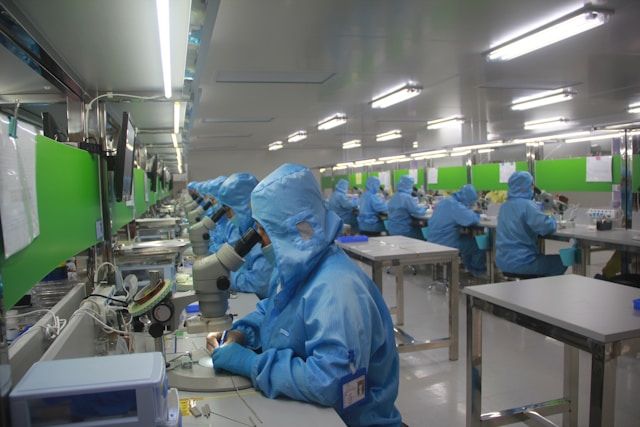
In a GMP environment, equipment maintenance is not only an engineering activity. It is part of product quality, batch safety, deviation control, and audit readiness.
A machine may be repaired quickly, but if the team cannot prove what was checked, who performed the work, what parts were changed, whether calibration was valid, and whether the asset was released correctly, the maintenance record becomes a compliance risk.
This checklist is written for pharma maintenance managers, engineering teams, quality teams, and supervisors who need practical control over production equipment, utilities, cold rooms, HVAC assets, packaging lines, and inspection equipment.
What GMP equipment maintenance must prove
A useful GMP maintenance process should prove five things:
- Equipment was maintained as per an approved schedule.
- Critical checks were completed and recorded.
- Breakdown work was documented with clear impact and corrective action.
- Calibration and inspection records were current where required.
- Open defects, deviations, and follow-up actions were not forgotten.
This is why maintenance records should not live only in paper files, Excel sheets, or technician memory. GMP maintenance needs traceability.
1. Keep a controlled asset register
Start with a clean asset register. Every maintainable asset should have a clear asset code, asset name, location, department, criticality, manufacturer details, model, serial number where relevant, and maintenance responsibility.
For GMP areas, also identify whether the asset has direct, indirect, or no product quality impact. This helps the team decide which assets need stricter PM, calibration, inspection, and record controls.
Useful fields include:
- Asset code and asset name
- Room, line, area, or location
- Equipment type
- Quality impact classification
- Criticality
- Responsible team
- Linked documents, manuals, SOPs, and certificates
- Active PM plans and calibration schedules
A structured asset management software workflow makes this easier because the maintenance history stays attached to the asset instead of being scattered across files.
2. Define preventive maintenance tasks clearly
A GMP PM checklist should not say only “check machine.” It should tell the technician what must be inspected, measured, cleaned, lubricated, tightened, tested, or verified.
Good PM steps include:
- Safety isolation requirement
- Visual inspection points
- Cleaning and lubrication checks
- Wear part checks
- Abnormal noise, vibration, leakage, or heating observations
- Guards, interlocks, and emergency stop checks
- Utility connection checks
- Record of readings where applicable
- Final housekeeping and release confirmation
The PM should be realistic. If a checklist is too long, technicians may tick steps without proper inspection. If it is too vague, the record will not satisfy quality review.
A practical preventive maintenance software setup helps plants schedule these PMs, assign ownership, track missed work, and keep completion evidence available.
3. Control calibration-related equipment
Many GMP assets depend on measurement accuracy. Temperature sensors, pressure gauges, weighing systems, flow meters, analytical instruments, data loggers, and control devices may need calibration control.
The checklist should verify:
- Calibration status is valid before use.
- Calibration label or certificate reference is available.
- Due date is not crossed.
- Out-of-tolerance findings are escalated.
- Equipment is not used when calibration status is unclear.
- Calibration records are linked to the asset.
Calibration failure is not only a maintenance issue. It may affect batch records, product quality decisions, and audit observations. A calibration management software process helps connect due dates, certificates, asset history, and reminders.
4. Document breakdowns with impact and action
Breakdowns in GMP areas should be recorded with more detail than “motor replaced” or “machine repaired.” The record should explain what failed, when it happened, whether production or quality was affected, what immediate correction was done, and what follow-up is required.
A useful breakdown record should include:
- Date and time of failure
- Asset and location
- Symptom observed
- Production impact
- Product or batch impact if applicable
- Immediate corrective action
- Parts replaced
- Technician and supervisor remarks
- Whether quality review or deviation is required
- Follow-up action to prevent recurrence
This is where work order management software becomes important. A work order gives ownership, timestamp, activity history, parts usage, photos, and closure remarks.
5. Capture spare parts used during maintenance
For GMP equipment, spare part replacement should be traceable. This is especially important for product-contact parts, filters, belts, seals, gaskets, sensors, bearings, and parts linked to repeated failures.
The maintenance record should capture:
- Part name and code
- Quantity used
- Batch or serial reference where required
- Reason for replacement
- Whether the part was planned or emergency usage
- Whether stock needs replenishment
Poor spare tracking creates two problems. First, the next repair gets delayed because stock is not available. Second, the plant loses visibility into repeated part consumption on the same asset.
6. Review open defects and repeated issues
A checklist is useful only if observations become action. Repeated leakage, abnormal sound, temperature drift, poor sealing, nuisance alarms, and frequent minor stoppages should not remain as remarks.
Supervisors should review:
- Repeated failures on the same asset
- PM observations not converted into work orders
- Overdue corrective actions
- High spare consumption
- Assets with recurring breakdowns
- Deviations linked to equipment condition
This turns maintenance records into reliability improvement, not just compliance paperwork.
7. Keep audit evidence easy to retrieve
During an audit, the team should be able to show asset history, PM completion, breakdown record, calibration status, parts usage, and corrective action history quickly.
Useful evidence includes:
- Approved PM schedules
- Completed work orders
- Checklist responses
- Calibration certificates
- Photos where relevant
- Breakdown history
- Deviation-related maintenance action
- Follow-up closure records
Bottom line
GMP equipment maintenance is about control, evidence, and follow-through. The goal is not to create more paperwork. The goal is to make sure critical equipment is maintained, failures are visible, calibration is controlled, and audit evidence is available when quality or regulators ask for it.
A good CMMS helps pharma teams connect assets, PMs, work orders, calibration, spare parts, documents, and reports into one maintenance history that is easier to trust.
Frequently asked questions
- Is a maintenance SOP required for GMP?
Yes. Every GMP-compliant facility must have maintenance SOPs that define frequency, responsibility, and documentation procedures.
- Can I use Excel sheets for GMP logs?
Technically, yes, but spreadsheets don’t meet traceability requirements. A CMMS provides timestamped, role-based digital logs preferred by auditors.
- What if we miss a scheduled maintenance task?
Log it as a deviation, perform root cause analysis, and apply corrective actions. Frequent misses without documentation raise audit flags.
- How often should GMP equipment be calibrated?
Calibration frequency depends on the equipment type and its criticality to product quality. However, most GMP facilities calibrate sensors, probes, and measuring devices at least monthly or quarterly, with records stored for audit readiness.
- What documentation is required for GMP equipment maintenance?
You need maintenance logs with timestamps, technician initials, calibration certificates, deviation records, SOPs, and equipment qualification reports (IQ, OQ, PQ). These must be traceable and version-controlled.
- Can I use a CMMS to track calibration schedules, too?
Yes. A CMMS can schedule and document calibration tasks, store certificates, and trigger alerts for overdue equipment, making it easier to meet GMP expectations.